Clear scope and priorities
We identify the likely source of moisture, the materials at risk, and which rooms need attention first so you can avoid unnecessary tear-out.
Serving Raleigh, North Carolina & surrounding areas
Mold Testing · Raleigh, NC
If you smell mustiness, see staining, or had a recent leak, a clear test plan matters. Get a thorough inspection, properly collected samples, and straightforward guidance on what to do next.
Useful Answers, Not Scary Numbers
Mold testing is useful when it answers specific questions: Is there likely indoor amplification? Where is it coming from? Is the HVAC distributing it? What areas need containment if work is required?
For mold testing Raleigh NC homeowners can rely on, the goal is not to chase a scary number. Mold spores exist everywhere. A good inspection ties observations and moisture clues to sampling, then turns the results into an action plan that fits the building.
You typically want testing when:
You may not need paid testing if you have obvious visible growth on an easy-to-remove material and the source of moisture is already fixed. In those cases, a focused inspection can confirm scope and give you safe next steps.
Building-Led Investigation
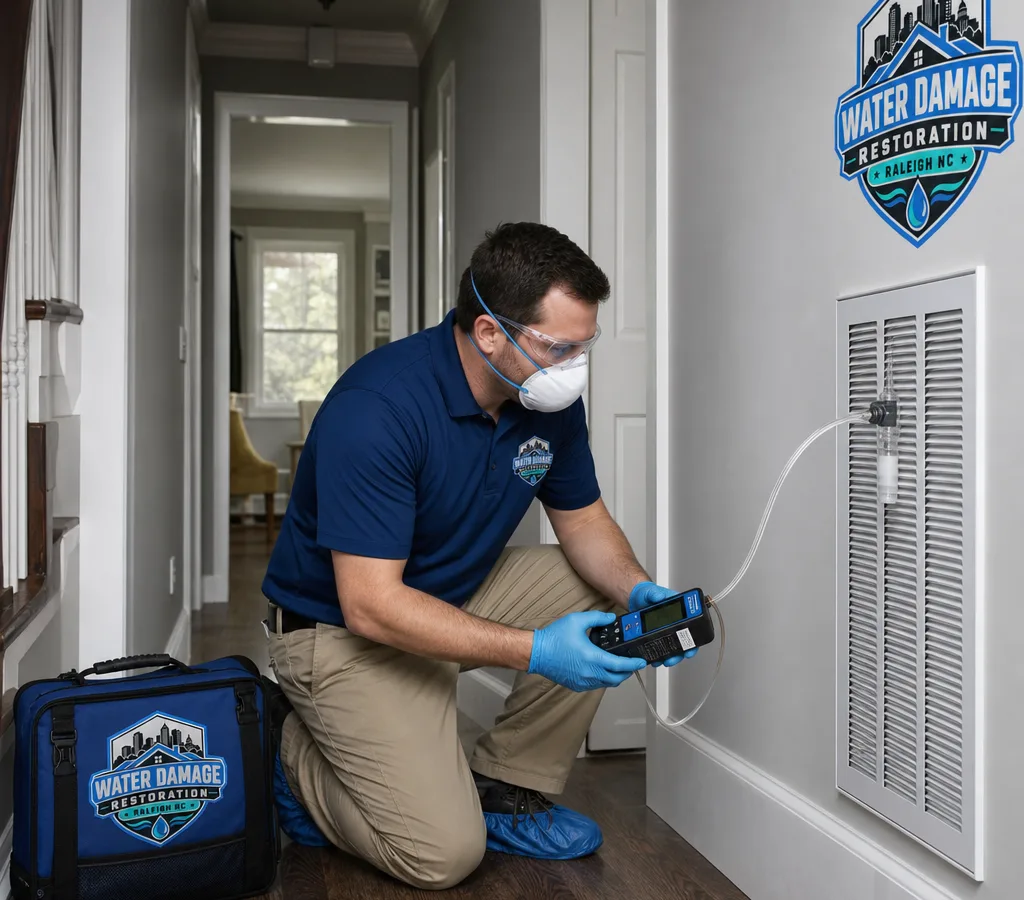
Our process starts with the building, not the lab report. We inspect for moisture pathways, material conditions, and air movement that can spread spores, then we sample only where it adds clarity.
A typical visit for mold testing in Raleigh includes:
Because Raleigh homes vary from newer airtight builds to older homes with crawlspaces and mixed ventilation, we focus on the conditions that drive mold: moisture, materials, and airflow. If you also need help after a leak, our team can coordinate with water damage restoration in Raleigh so the moisture problem is corrected before rebuild decisions are made.
From Inspection to Action
We identify the likely source of moisture, the materials at risk, and which rooms need attention first so you can avoid unnecessary tear-out.
Air and surface sampling is used when it changes the decision, such as confirming indoor amplification, checking a suspect room, or documenting a post-dryout condition.
You get a plan that separates immediate safety steps, such as isolating a room, from longer-term fixes like correcting ventilation or drainage issues.
When removal is needed, we focus on limiting cross-contamination, protecting adjacent rooms, and keeping dust and debris under control.
If results indicate remediation, we explain what a proper remediation setup should include so you can compare proposals with confidence.
Raleigh Moisture Patterns
Mold concerns commonly follow leaks and everyday humidity, especially in spaces that stay cooler and do not dry quickly.
Request Emergency ServiceWe work across the Raleigh area, including single-family neighborhoods and condo buildings where access, shared walls, and HVAC layouts change the sampling plan.
A townhome in North Hills may need targeted checks along shared wall chases and return pathways, while older homes around Five Points can have mixed assemblies and older bath ventilation that require a closer look. In Downtown Raleigh condos, we often focus on HVAC closet conditions and any history of condensate issues. In Brier Creek homes, concerns frequently follow recent leak repairs, where verifying dryness and cleanliness matters before materials are closed back up.
Inspection Through Follow-Through
Each step narrows uncertainty, starting with the building history and ending with practical recommendations.
We start with what changed: a leak date, a remodel, a musty odor timeline, or a health concern. That context determines where we look first and whether testing is likely to help.
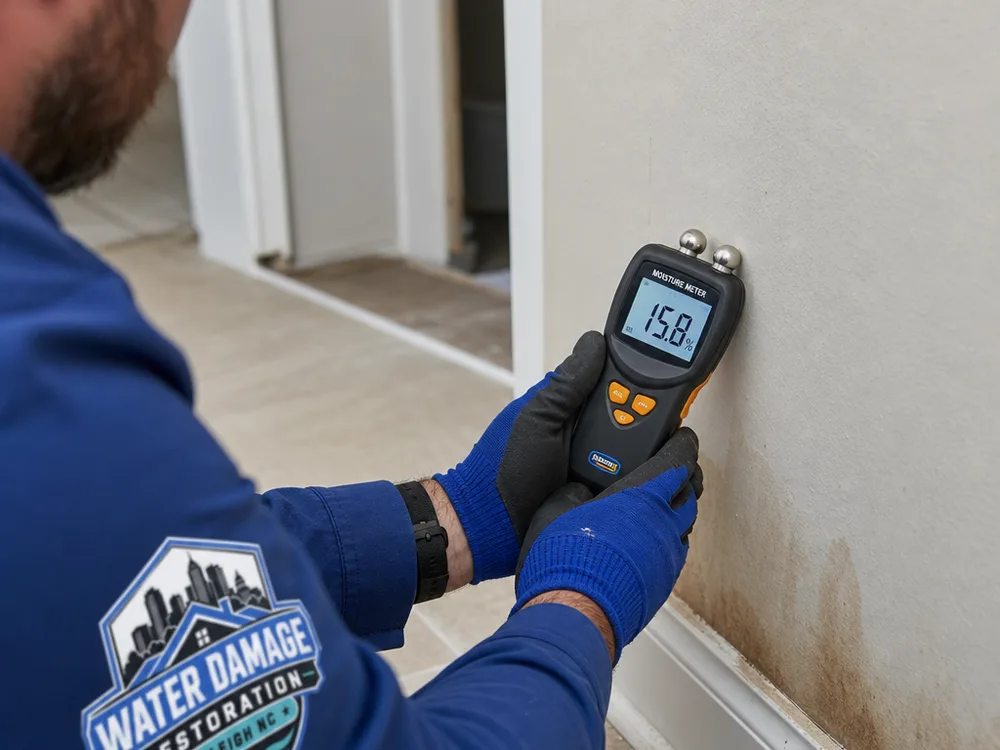
We inspect suspect rooms, adjacent areas, and common pathways. Moisture readings help confirm whether building materials remain at risk or the issue is historical.
Air sampling compares indoor areas to an outdoor baseline. Surface samples help identify what is growing on a material when that affects removal decisions.
We translate results into decisions: what to remove, what can be cleaned, what needs to dry, and what building condition must change so the problem does not return.
If remediation is warranted, we outline what a proper setup should include: containment, filtration, detailed cleaning, and verification. If the source is water-related, timing and drying steps come first.
Planning the Inspection
Mold testing in Raleigh typically ranges from about $300 to $900, depending on the size of the home, the number of sampling locations, and whether surface sampling is needed in addition to air samples. A small, focused inspection with one or two samples often sits at the lower end, while larger homes or multi-area investigations cost more.
Pricing mainly changes with how many areas need to be evaluated, access to attics or crawlspaces, HVAC complexity, and whether prior water damage requires extra documentation. Exact cost is confirmed after the on-site inspection and sampling plan are set.
Customer Experiences
★★★★★“We had a musty smell after a shower leak and didn't want to guess. The inspection showed where the moisture actually was, the sampling plan made sense, and the results were explained in plain language.”
★★★★★“They walked us through what a real remediation setup should include, so we could compare quotes without getting pushed into unnecessary demolition.”
Clear Answers Before You Sample
If you have clear visible growth and the wet source is already fixed, testing is often optional because the next step is usually safe removal and cleaning guidance. Testing becomes more useful when you need to confirm how far it spread, whether there is hidden growth, or whether the HVAC may be distributing spores to other rooms.
Air sampling helps compare indoor air to an outdoor baseline to see if a specific area is likely being affected by indoor amplification, while surface sampling identifies what is present on a visible spot, such as drywall paper or framing. We often use air samples for room-to-room comparisons and surface samples when a material decision depends on it.
Most inspections take about 60 to 120 minutes depending on the number of areas, attic or crawlspace access, and whether you want multiple indoor air samples. Larger homes or complicated leak histories can take longer because the inspection needs time to trace moisture pathways.
Yes, when access is available and those areas are relevant to the complaint. In many Raleigh homes, crawlspace moisture and HVAC air movement can affect indoor conditions, so we often inspect returns, supply pathways, and visible condensation or staining around mechanical closets.
We can explain what the results mean in context and whether they suggest indoor amplification, but no mold report can guarantee a medical outcome. We can provide a clear interpretation tied to building conditions, along with practical steps to reduce exposure and correct the moisture driver.
Avoid changing conditions right before the visit if possible, because heavy filtration, open windows, or aggressive fan use can skew what we see and measure. Keep the home in normal living conditions unless there is an active leak or standing water, in which case containment and drying steps come first.
Schedule a Mold Inspection
Tell us what you are seeing, smelling, or dealing with after a leak. We will recommend a practical mold testing plan and explain the results so you can move forward with the right next step.