Containment first
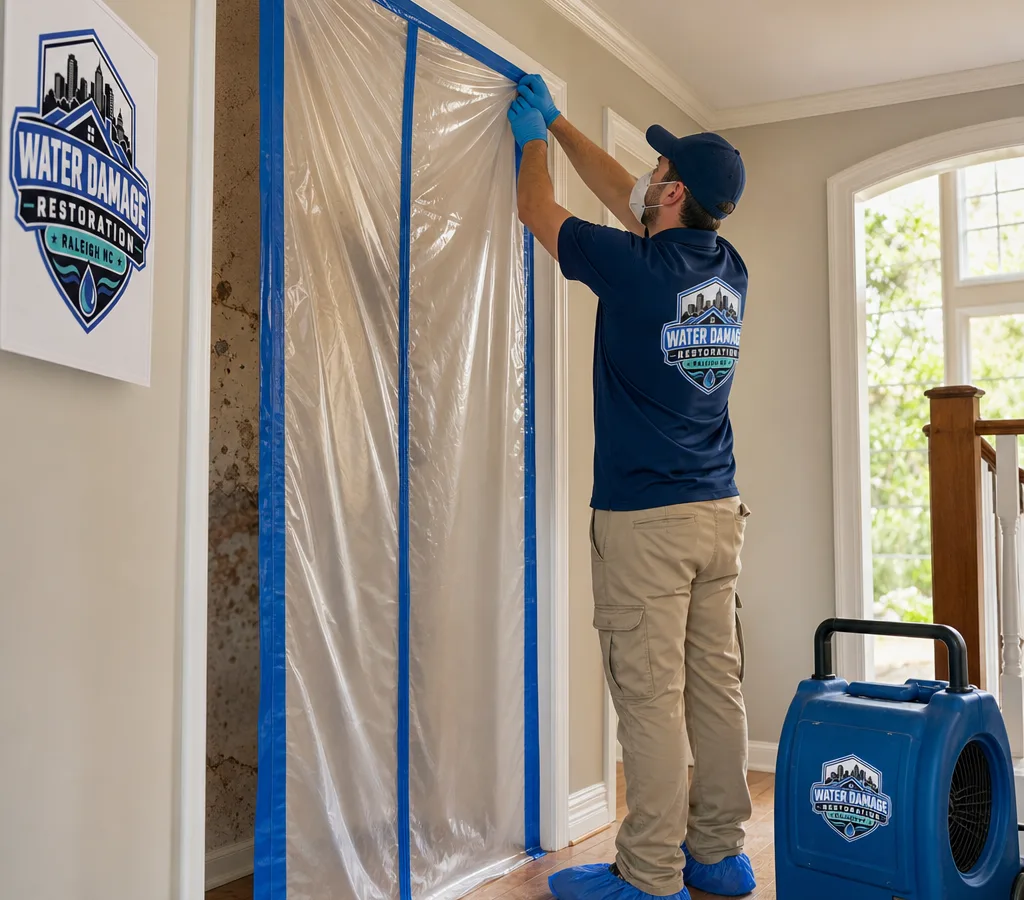
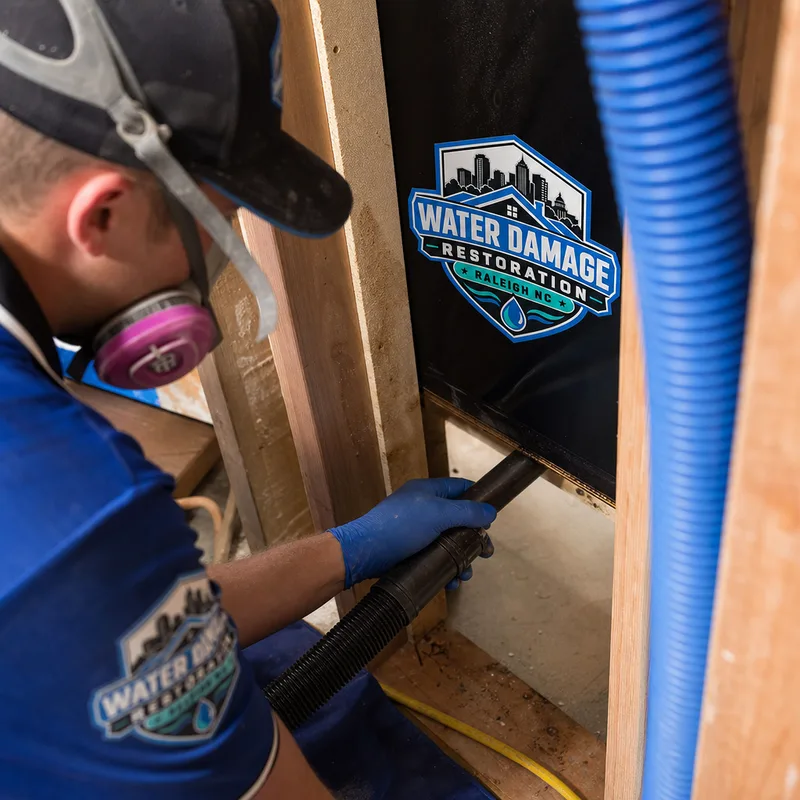
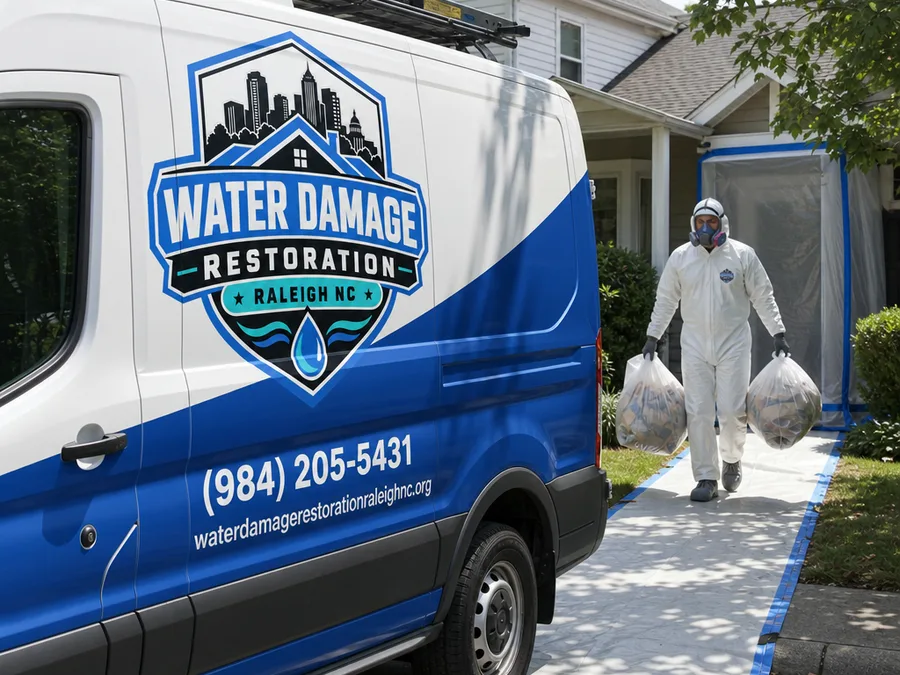
We isolate the work area with plastic sheeting and maintain negative pressure when needed to keep spores from moving into clean rooms.
Serving Raleigh, North Carolina & surrounding areas
Mold Remediation · Raleigh, NC
If you smell a musty odor, see staining, or have had a recent leak, our certified team can contain the area, remove affected materials safely, and verify the cleanup so you can use the space again with confidence.
Control the Source and Spread
Mold remediation Raleigh NC work is not a spray-and-go job. Real remediation means stopping spore spread, removing contaminated materials that cannot be cleaned, cleaning what can be saved, and making sure the moisture source is addressed so growth does not return.
In Raleigh, moisture problems often come from everyday building issues: slow plumbing leaks under sinks, condensation around HVAC equipment, damp crawlspaces, roof or flashing leaks, and water intrusion after heavy storms. Homes around Downtown Raleigh and inside the Beltline include a mix of older construction and remodels where hidden cavities can hold moisture. Newer builds in areas like Brier Creek can still develop mold if an attic, bathroom fan, or air handler is not vented or draining correctly.
Water Damage Restoration Raleigh NC focuses on clear scopes and controlled work. You should know what is being removed, what is being cleaned, how the area will be contained, and what “done” means before work starts.
Controlled Mold Removal
We isolate the work area with plastic sheeting and maintain negative pressure when needed to keep spores from moving into clean rooms.
Porous items like drywall, insulation, carpet padding, and some ceiling tiles often need to be removed and disposed of correctly once contaminated.
We use HEPA air filtration and HEPA vacuuming, followed by damp wiping with appropriate antimicrobial products on affected surfaces.
We check likely pathways and adjacent materials so you are not left with hidden wet spots that restart the problem behind a wall or under flooring.
You get a written scope and progress notes that make it easier to coordinate with property managers, real estate timelines, or insurance questions.
We plan the work around occupied spaces, access needs, and dust control, whether it is a home, office suite, or retail back room.
Inspection Through Verification
Most mold remediation in Raleigh follows the same core sequence because the goal is always the same: control contamination and fix the conditions that allow growth.
We look for visible growth, water staining, and odor sources, then check moisture levels in building materials. If a third-party mold test is already available, we align the scope to it.
If there is an active leak or ongoing moisture, that gets addressed first. Many mold jobs start after water damage restoration in Raleigh work because drying and remediation are tied together when materials have been wet.
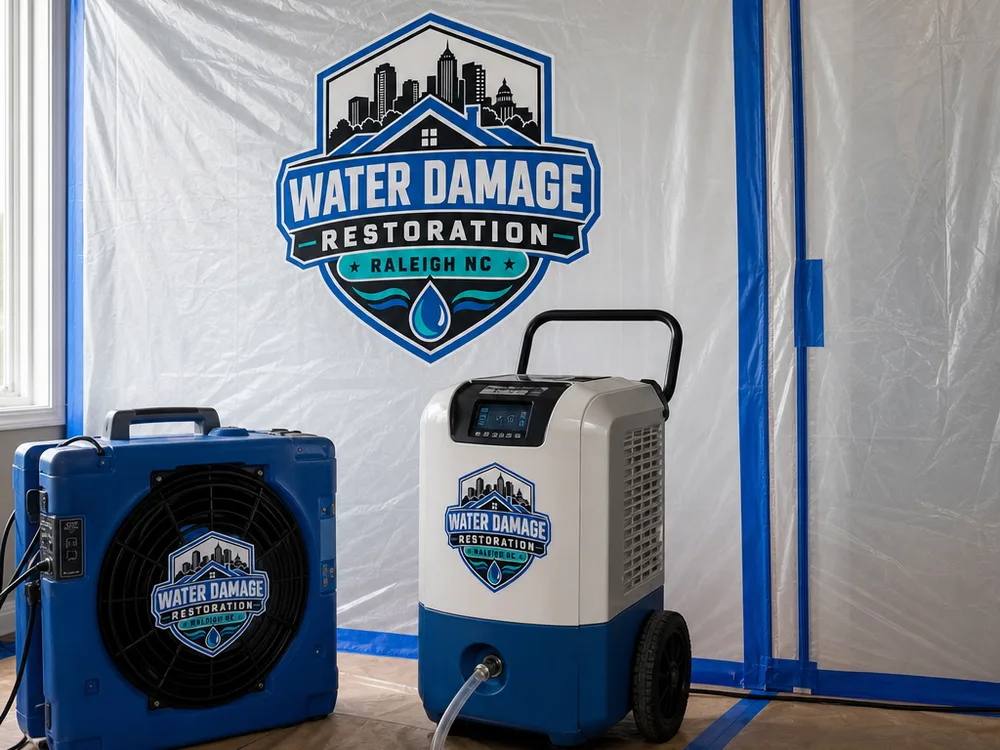
We set containment barriers and, when appropriate, negative air machines with HEPA filtration to reduce spore migration.
Contaminated porous materials are removed. Semi-porous and non-porous surfaces are cleaned using HEPA methods and antimicrobial treatments suitable for the surface.
We confirm moisture levels have returned to a normal range for the material and location. If clearance testing is being performed by an independent indoor environmental professional, we coordinate timing so the area is ready.
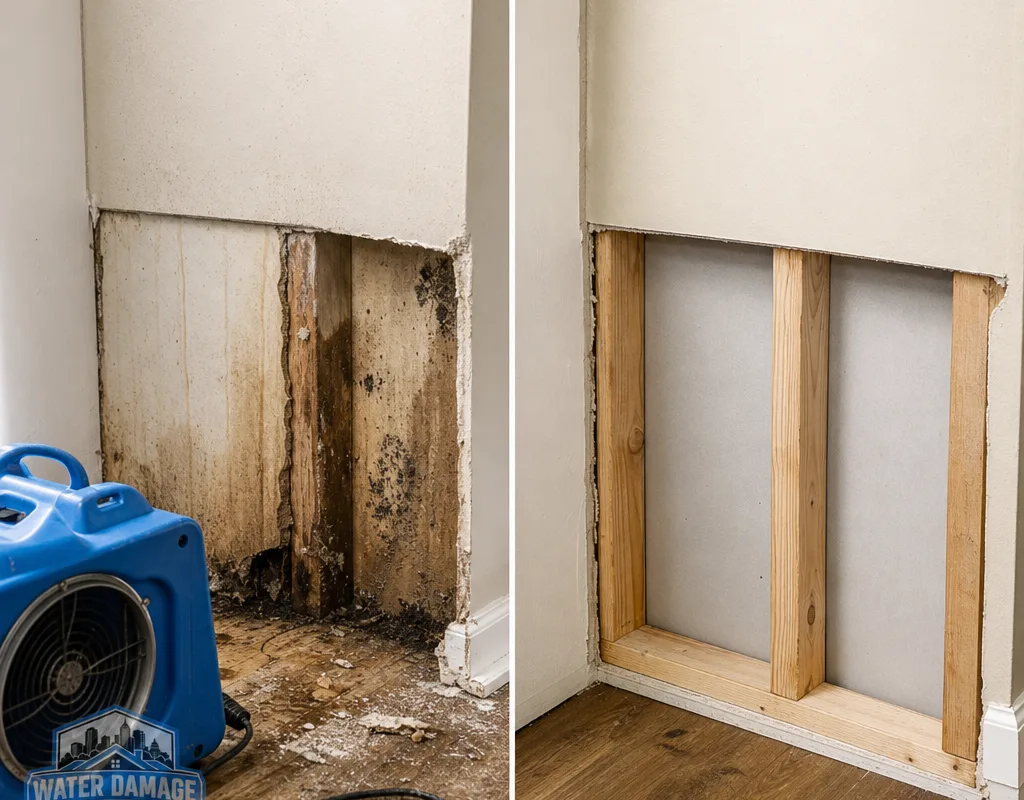
Common Hidden Locations
The fastest way to control a mold issue is to treat it like a moisture investigation, not a surface-cleaning project.
Request Emergency ServiceIf you are selling, buying, or renovating, do not assume the visible spot is the whole problem. The right approach is to define boundaries, confirm what is wet, and remediate only what is affected so the repair plan is accurate.
Planning the Scope
Mold remediation in Raleigh typically ranges from about $1,000 to $6,000 for many residential projects, with small, contained areas sometimes lower and multi-room or crawlspace/attic projects often $6,000 to $15,000+. Cost depends on the size of the affected area, how much porous material must be removed, access (attic/crawlspace depth and clearance), the need for full containment with negative air, and whether drying is still required. The exact price is confirmed after an on-site inspection and a written scope.
Request Emergency ServiceContained, Protected Work Areas
Customer Experiences
★★★★★“They explained what had to come out versus what could be cleaned, set up containment that actually kept dust and smell out of the rest of the house, and finished on the timeline they gave us.”
★★★★★“The written scope made it easy to coordinate repairs. The crew showed up in proper PPE and the air scrubbers ran the whole time, which helped us feel comfortable staying in the home.”
★★★★★“We had mold behind a vanity after a slow leak. They found damp drywall beyond the visible stain and stopped it from spreading further.”
Straight Answers Before Work Begins
Start time depends on how urgent the situation is and whether there is active water still wetting materials, but many projects can begin quickly once the scope is confirmed. If there is a current leak or recent flooding, containment and drying decisions should be made right away because wet drywall and insulation can deteriorate fast and spread contamination into nearby cavities.
You do not always need testing to begin remediation if there is visible growth and a clear moisture source, because the containment and removal steps are based on contamination and building materials, not the exact species. Testing can be useful for real estate transactions, when there are symptoms without visible mold, or when an independent party will perform clearance testing after remediation.
Sometimes, yes, but only when the affected material is non-porous or can be cleaned thoroughly without leaving contamination embedded in it. Drywall paper, insulation, carpet padding, and many ceiling tiles are porous, and remediation commonly requires removal to the nearest clean, dry boundary so the cavity can be cleaned and dried properly.
Often you can stay in the home if the affected area can be isolated with containment and the work zone is kept under negative pressure, but it depends on where the mold is and who lives in the home. People with asthma, allergies, or compromised immune systems may prefer to avoid the property during demolition and cleaning, and some projects affect key spaces like a single bathroom or the main HVAC return path.
Many contained projects take 1 to 3 days for removal, cleaning, and drying verification, while larger crawlspace, attic, or multi-room scopes can take longer. Timelines change based on how wet materials are, how much demolition is needed, and whether independent clearance testing is scheduled.
Yes. Commercial mold remediation often needs documented access times, protected pathways through occupied areas, and clear isolation of work zones so neighboring suites remain usable. We coordinate scope, containment, and verification steps so the building can keep operating safely around the remediation area.
Schedule an On-Site Inspection
Tell us what you are seeing and where it is located, and we will schedule an on-site inspection in Raleigh to define the scope, containment approach, and next steps for cleanup and repairs.