
Plumbing supply and drain leaks
Leaks at shutoff valves, faucet connections, toilets, shower valves, tubs, and drain lines. We trace moisture patterns and verify the source before anyone opens walls.
Serving Raleigh, North Carolina & surrounding areas
Leak Detection · Raleigh, NC
Find the source fast, limit damage, and get a clear plan before repairs start. Our team locates hidden leaks in walls, floors, and slabs using non-destructive methods whenever possible.
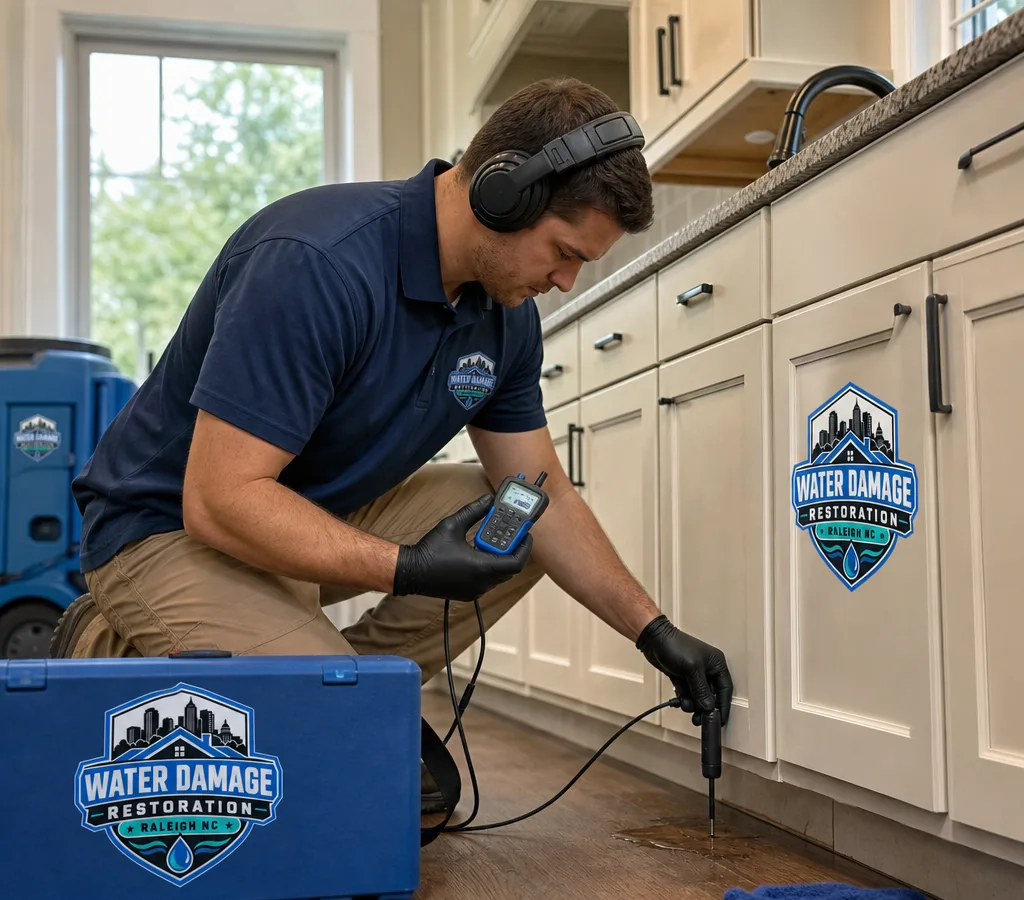
Find the Source Before Opening Surfaces
If you are searching for leak detection Raleigh NC, you are usually dealing with one of two problems: active water showing up where it should not, or quiet damage that has been building for days or weeks.
Leaks do not always announce themselves. You might notice a musty odor, a warm spot on the floor, bubbling paint, cupping hardwood, or a water bill that suddenly climbs. In Raleigh, many homes mix older plumbing runs with newer renovations, and leaks can hide behind tile, under cabinets, or beneath slab foundations.
Water Damage Restoration Raleigh NC focuses on pinpointing the source first, then helping you stabilize the situation so the next repair is targeted. The goal is to avoid unnecessary demolition, shorten the time your home is disrupted, and reduce the chance of secondary issues like microbial growth.
If the leak has already soaked building materials, the next step often overlaps with water damage restoration in Raleigh so the structure can be dried properly before surfaces are rebuilt.
Hidden Leak Locating
Leaks at shutoff valves, faucet connections, toilets, shower valves, tubs, and drain lines. We trace moisture patterns and verify the source before anyone opens walls.
Warm spots, damp flooring, or unexplained moisture can point to a leak below the finished surface. We use location tools to narrow the search area.
Stains often show up far from the actual entry point. We follow the path of water through framing and insulation to find where it is really coming from.
Dishwashers, refrigerators with water lines, washing machines, and icemakers can leak slowly and damage subfloors. We identify whether the source is supply, drain, or overflow.
After a plumber or roofer completes a fix, we can re-check the area for remaining moisture so you are not sealing water into the assembly.
Accurate, Targeted Inspection
Good leak detection is a process, not a guess.
First, we listen and look. We check visible fixtures, supply shutoffs, and the most common failure points, then map moisture with meters to understand direction and spread. When the leak is hidden, we may use acoustic listening to pinpoint pressurized line leaks, infrared imaging to spot temperature differences caused by wet materials, and targeted probing to confirm what is wet and what is dry.
We document what we find in plain language: where the moisture is, what is most likely feeding it, and what access point is the smallest reasonable opening to confirm the source. If materials are already saturated, we will also flag what should be dried, removed, or protected right away to avoid trapped moisture behind finishes.
This approach is especially helpful in Raleigh homes with tile showers, finished basements, or engineered wood floors, where unnecessary removal can turn a small leak into a large rebuild.
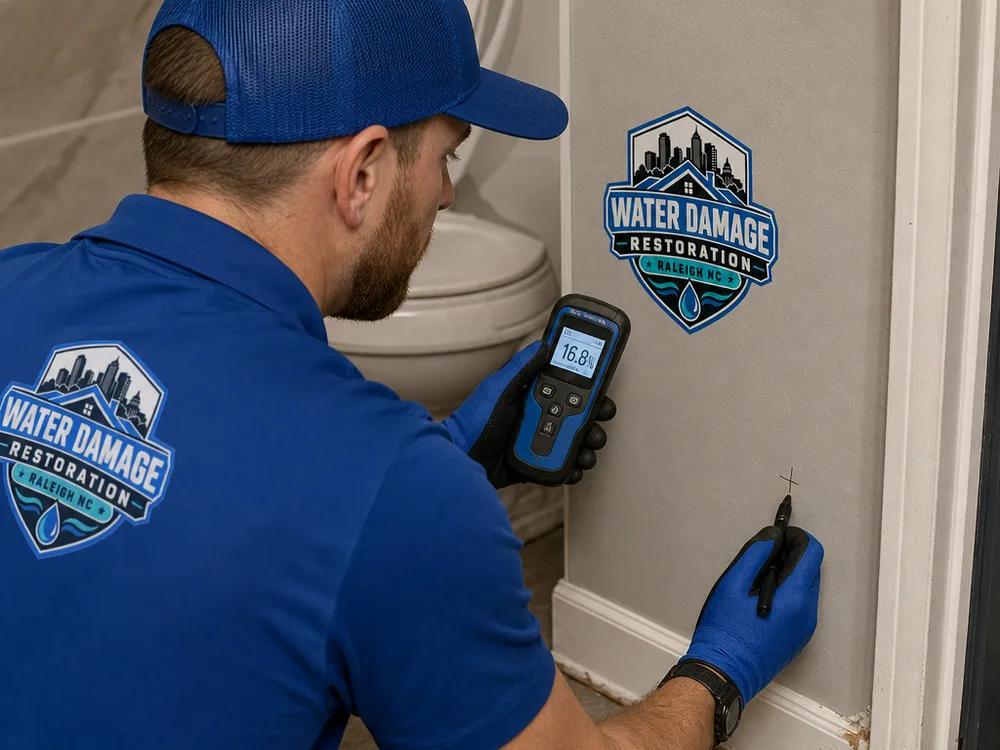
From Triage to Next Steps
Each step narrows the search, limits unnecessary openings, and creates a practical plan for repair and cleanup.
Request Emergency ServiceWe start by identifying any immediate hazards, like water near electrical outlets or a ceiling that is holding water. If shutting off a fixture or main supply is appropriate, we will explain the safest option.
We narrow the problem down to a system: supply, drain, fixture, appliance, or exterior entry. This step prevents chasing stains that are only symptoms.
Using meters, acoustic tools, and thermal imaging as needed, we identify the most likely source location and the smallest access area to confirm it.
We map affected materials—drywall, baseboards, flooring, and cabinets—and explain what is wet, what can dry in place, and what may need removal depending on saturation and material type.
Once the leak is confirmed, we outline what needs to happen next, including coordination with the appropriate trade for the actual pipe or fixture repair, and drying or cleanup if water has spread into the structure.
Clear On-Site Pricing
Leak detection in Raleigh typically ranges from $200 to $600 for a straightforward locate, while harder-to-pinpoint leaks—like under-slab, multi-story tracing, or intermittent issues—often run $600 to $1,200+. Final pricing depends on access, whether the leak is active, how many areas must be tested, and whether moisture mapping or documentation is needed for your situation. The exact cost is confirmed after the on-site inspection and locating work begins.
Request Emergency ServiceCustomer Experiences
★★★★★“We had water showing up at the edge of the living room floor and could not tell if it was the bathroom, the fridge line, or something in the wall. They traced it quickly, marked one small spot to open, and the plumber confirmed the leak right where they said.”
★★★★★“The best part was getting a clear explanation of what was wet and what was not. It kept us from tearing out more tile than necessary, and the drying plan made sense.”
Answers Before We Arrive
Response time depends on current demand, but urgent leak detection is prioritized because water damage spreads with time. If you have active dripping, ceiling staining, or wet flooring, share what you are seeing and where, and we will advise the safest immediate steps while we schedule the soonest available visit.
Not always, and the goal is to avoid unnecessary openings. We use non-destructive locating methods first—moisture meters, acoustic tools, and thermal imaging—then recommend the smallest targeted access point only when confirmation is needed.
Common signs include a persistent musty odor, paint or drywall that bubbles or stains, baseboards that swell, flooring that cups or feels soft, and unexplained humidity in one area. A sudden change in your water bill can also indicate a pressurized supply leak, even if you do not see water.
Yes, under-slab leaks can often be located by combining moisture mapping with acoustic detection and temperature patterning. Because water can travel under flooring and emerge elsewhere, the goal is to narrow the search area before any drilling or cutting is considered.
Leak detection identifies the source and the best access point; the actual pipe or fixture repair is typically performed by a licensed plumber or the appropriate trade for the system involved. We can provide clear locating notes that make the repair faster and reduce trial-and-error demolition.
If it is safe, shut off the water to the affected fixture or the home, move items away from wet areas, and avoid using the system you suspect—for example, do not run the dishwasher or shower. If a ceiling is bulging or dripping, keep the area clear and place containment below the drip to limit spread.
Schedule Leak Detection
Tell us what you are seeing, where it started, and any recent plumbing or appliance changes. We will schedule leak detection in Raleigh and give you a clear, targeted plan for the next step.