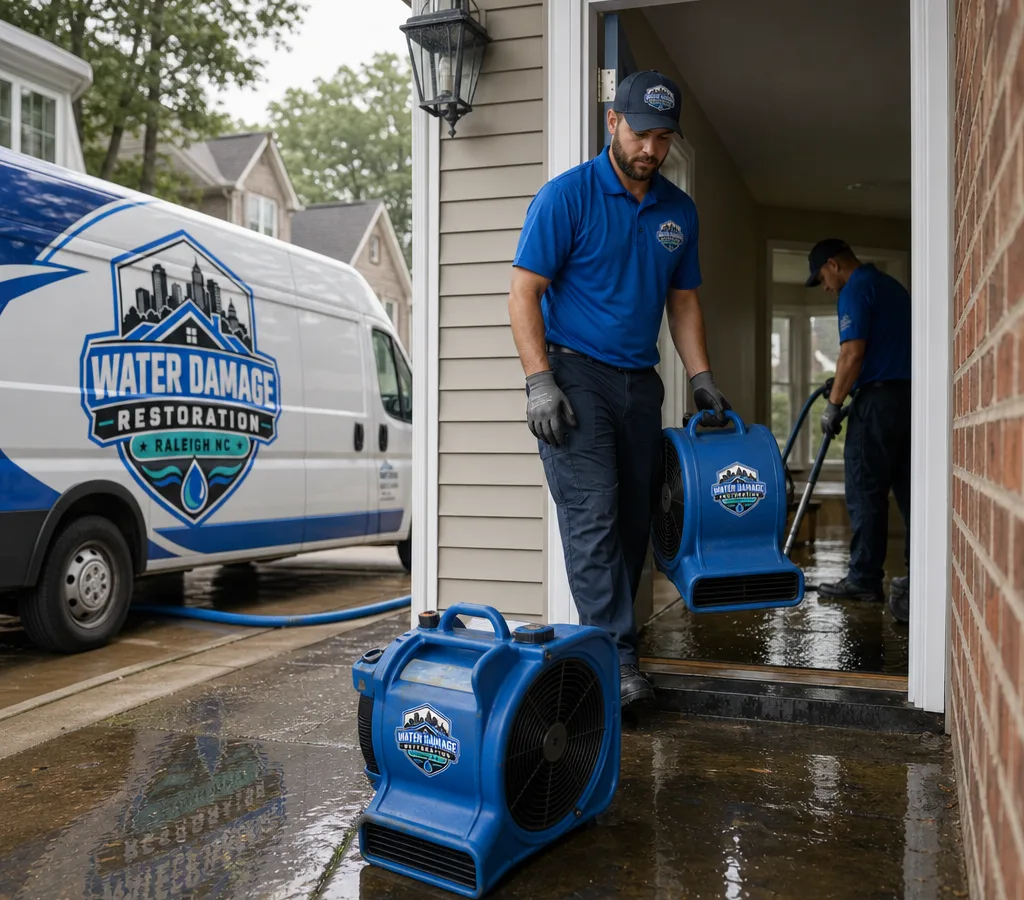
Rapid water extraction
We remove standing water quickly to reduce spread into drywall, cabinets, insulation, and flooring systems.
Serving Raleigh, North Carolina & surrounding areas
Flood Restoration · Raleigh, NC
When water gets in, the clock starts. Our team responds fast with documented cleanup, professional drying, and repair planning so you can protect your home and move forward with confidence.
Complete Flood Recovery
Flood restoration Raleigh owners need usually starts the same way: water comes in through a door, garage, crawl space, foundation opening, or a low spot in the yard, and within hours materials start to swell, cup, or wick moisture into places you cannot see.
Water Damage Restoration Raleigh NC handles the full flood restoration scope, not just the visible mess. That means controlled water removal, moisture mapping, drying and dehumidification, selective demolition when materials cannot be saved, cleaning and odor control, and a clear plan for putting the home back together.
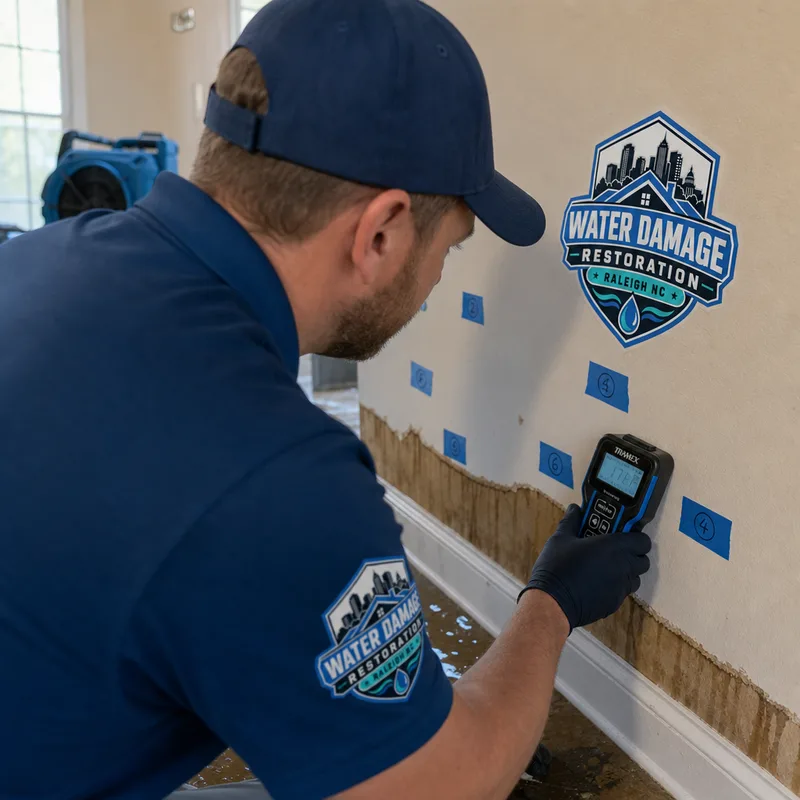
Raleigh's mix of slab-on-grade and crawl space homes makes flood losses tricky. Crawl spaces can hold moisture long after the surface looks dry, and water can migrate under flooring and into baseboards. We use industry-standard moisture meters and targeted checks—not guesswork—to confirm drying progress before rebuild decisions are made.
If you are dealing with a broader water event, our team also provides water damage restoration that covers non-flood sources such as leaks and plumbing failures, with the same emphasis on documentation and drying verification.
From Extraction to Repair Planning
We remove standing water quickly to reduce spread into drywall, cabinets, insulation, and flooring systems.
We locate hidden moisture in walls, subfloors, and crawl spaces, then track drying with documented readings.
Air movers and dehumidifiers are placed for airflow and vapor removal, then adjusted as the structure dries.
When carpet pad, swollen baseboards, or saturated drywall cannot be restored safely, we remove only what is needed to dry the structure.
Floodwater often carries soil and contaminants. We clean affected surfaces and address odors at the source, not with masking scents.
You get a written scope of what was affected, what was done, and what the next repair steps should look like.
Find the Hidden Moisture
After a flood, the riskiest moisture is often the moisture you cannot see. Water travels by capillary action into drywall, insulation, and framing, and it can pool under floating floors or in low spots of a crawl space.
In Raleigh neighborhoods with mature trees and older grading, stormwater can move toward foundations during heavy rain. In areas with lots of newer construction and tight building envelopes, moisture can stay trapped without aggressive dehumidification and controlled airflow.
We approach each flood loss like a diagnostic job first. We identify wet building materials, decide what is realistically salvageable, and set up equipment to dry the structure evenly. Drying the surface while leaving moisture behind is how secondary damage starts.
If your flood affected a crawl space, we pay close attention to vapor barriers, piers, and the wood moisture content of joists and subflooring. If it affected a slab home, we check for moisture migration at wall plates, behind baseboards, and under floor coverings before repairs begin.
Assessment Through Verification
Each stage is guided by safety, measured moisture conditions, and the materials affected—not a fixed cleanup formula.
Request Emergency ServiceWe confirm the category of water, identify affected rooms and materials, and discuss immediate safety concerns such as power to wet areas and slip hazards.
We extract standing water, pull up saturated flooring layers where appropriate, and open up trapped cavities so the structure can actually dry.
We place air movers and dehumidifiers based on room size and moisture load, then monitor readings and adjust equipment placement as conditions change.
We remove residue, clean affected surfaces, and treat materials that can be saved. Any odor work is tied to remaining moisture or contamination, not temporary cover-ups.
We document that drying goals are met, then provide a clear scope for repairs so you can rebuild without reintroducing moisture problems.
Understanding the Scope
Flood restoration in Raleigh typically ranges from about $1,500 to $8,000+ for cleanup and drying, with larger or heavily saturated losses—multiple rooms, crawl space involvement, or required material removal—sometimes running $10,000 to $25,000+.
Final cost depends on how far water traveled, the type of flooring and wall construction, how long materials stayed wet, access to affected areas, and whether demolition is needed to dry cavities. The exact price is confirmed after an on-site inspection and moisture mapping.
Customer Experiences
★★★★★“Water came in through the garage during a storm and spread into the hallway and a bedroom. They explained what had to come out, set up drying equipment the same day, and kept checking moisture until it was actually dry. The written scope helped us stay organized during repairs.”
★★★★★“We were worried about the crawl space after water got under the house. They treated it like a real drying job, not a quick vacuum-and-go, and showed us readings as it improved.”
Straight Answers After a Flood
Flood restoration should start as soon as it is safe to enter, because porous materials can begin absorbing and wicking water immediately and secondary damage can follow within days. If you cannot start work right away, keep people out of affected rooms, avoid running HVAC that may spread moisture, and document what happened for your records.
Sometimes, but floodwater often saturates drywall and insulation in a way that makes drying unreliable without opening the wall. The decision depends on how high the water rose, how long the material stayed wet, and what category of water is involved. We verify with moisture readings and decide whether selective removal is the safer path.
Most structural drying takes about 3 to 5 days once extraction is complete and equipment is set correctly, but longer drying is common when water reached multiple rooms, hardwood layers, or a crawl space. The timeline is driven by measured moisture content and humidity control, not by the calendar.
Start by stopping the source if it is a plumbing issue, and avoid electrical hazards in wet areas. Move small valuables and soft goods to a dry space, take clear photos of affected rooms, and keep doors to wet rooms closed if it helps contain humidity. If standing water is present, do not use household vacuums that are not rated for wet extraction.
Coverage depends on the source of the water. Many policies treat rising groundwater and storm surge differently from sudden interior water events like a supply line break. We can provide documentation of moisture readings, equipment placement, and the scope of affected materials, which is often useful during the claims process.
A musty smell usually means moisture or contaminated residue remains somewhere in the structure or contents. Proper flood restoration targets the source by drying to verified goals and cleaning affected surfaces and porous materials appropriately. If an odor persists, we re-check hidden cavities, subfloors, and enclosed spaces where moisture can linger.
Start With Moisture Mapping
Tell us what happened and what areas were affected. We will walk the property, map the moisture, and outline the next steps for cleanup, drying, and repairs in Raleigh, NC.